 Cabo Verde
 Eswatini
 Ivory Coast
 South Sudan
 Cyprus
 Syria
Syria
 Vietnam
 Palestine
 Iran
Iran
 Angola
 Armenia
 Azerbaijan
 Bahrain
 Bangladesh
 Benin
Benin
 Bhutan
 Botswana
 Brunei
 Burkina Faso
 Cambodia
 Cameroon
 Chad
Chad
 China
China
 Comoros
 Congo (Kinshasa)
 Egypt
Egypt
 Equatorial Guinea
 Eritrea
 Ethiopia
 Gabon
Gabon
 Gambia
 Georgia
 Ghana
Ghana
 Guinea
 Indonesia
 Iraq
Iraq
 Japan
Japan
 Jordan
 Kazakhstan
 Kenya
Kenya
 North Korea
 Kuwait
 Lebanon
 Liberia
 Libya
Libya
 Madagascar
 Malaysia
 Maldives
 Mali
Mali
 Mauritania
 Mauritius
 Mongolia
 Morocco
 Myanmar
 Namibia
 Niger
Niger
 Nigeria
 Oman
Oman
 Pakistan
 Philippines
 Russia
 Rwanda
 Senegal
 Seychelles
 Sierra Leone
 Singapore
 Somalia
 South Africa
 Sri Lanka
 Sudan
Sudan
 Taiwan
 Timor-Leste
 Turkey
 Turkmenistan
 Uzbekistan
 Afghanistan
 Algeria
 Burundi
 Djibouti
 Israel
 Laos
Laos
 Lesotho
 Malawi
 Nepal
Nepal
 Qatar
Qatar
 Saudi Arabia
 Tajikistan
 Thailand
 North Macedonia
 Vatican City
 Saint Pierre and Miquelon (France)
 Venezuela
 Chile
Chile
 Croatia
 Switzerland
 Zimbabwe
 Trinidad and Tobago
 Argentina
 Australia
 Austria
 Bahamas
 Barbados
 Belarus
 Belgium
 Belize
 Bermuda
 Bolivia
 Bulgaria
 Canada
 Colombia
 Costa Rica
 Cuba
Cuba
 Denmark
 Dominica
 Dominican Republic
 Ecuador
 El Salvador
 Estonia
 Fiji
Fiji
 Finland
 France
 French Guiana
 Germany
 Greenland
 Grenada
 Guyana
 Haiti
Haiti
 Hungary
 Iceland
 Ireland
 Italy
Italy
 Jamaica
 Kiribati
 Latvia
 Lithuania
 Malta
Malta
 Marshall Islands
 Mexico
 Micronesia
 Moldova
 Monaco
 Netherlands
 New Zealand
 Nicaragua
 Norway
 Paraguay
 Peru
Peru
 Poland
 Portugal
 Romania
 Saint Kitts and Nevis
 Saint Lucia
 San Marino
 Serbia
 Slovakia
 Slovenia
 Spain
Spain
 Suriname
 Sweden
 Tanzania
 Togo
Togo
 Tunisia
 Uganda
 Ukraine
 United Kingdom
 Uruguay
 Zambia
 Kosovo
 Andorra
 Bosnia and Herzegovina
 Brazil
 Greece
 Guatemala
 Montenegro
 Albania
 Aruba
Aruba
 Papua New Guinea
 Tuvalu
 Vanuatu
 Antarctica
 Antigua and Barbuda
 Central African Republic
 Guinea-Bissau
 Honduras
 India
India
 South Korea
 Kyrgyzstan
 Luxembourg
 Mozambique
 Nauru
Nauru
 Palau
Palau
 Panama
 Saint Vincent and the Grenadines
 Samoa
Samoa
 Sao Tome and Principe
 Tonga
Tonga
 United States
 Czech Republic
 Congo (Brazzaville)
 Liechtenstein
 United Arab Emirates
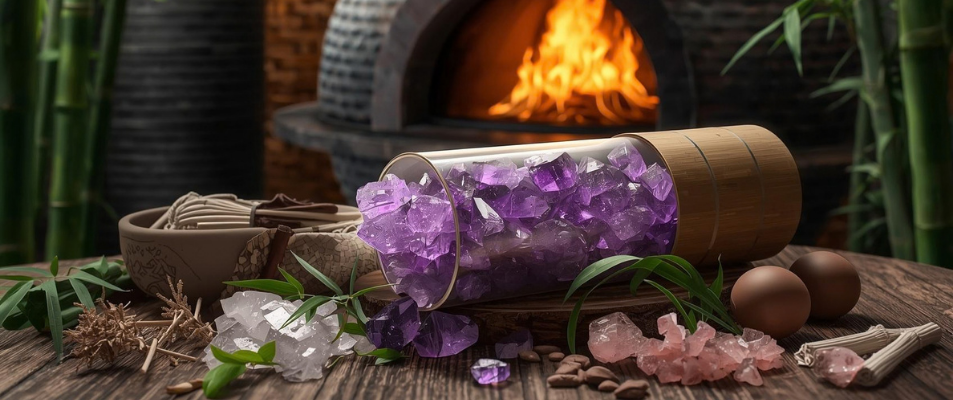
Table of Contents
- Introduction: Why Bamboo Salt Is Trending Worldwide
- What Is Bamboo Salt?
- A Quick Glimpse of Various Salts
- Types of Bamboo Salts You Must Know
- The Magic Behind 9 Times Roasted Bamboo Salt
- Why is the 9x Roasted Bamboo Salt Price So High?
- Health Benefits of Organic Bamboo Salt
- Uses of Bamboo Salt
- Bamboo Salt in Global Trade
- Tips for Buying Authentic Bamboo Salt
- Conclusion
- FAQs
- Contact Us
Introduction: Why Bamboo Salt Is Trending Worldwide
Have you ever noticed how people around the world are turning towards natural and organic products? From organic food to herbal cosmetics and skincare products, people around the world are turning towards nature once again. And one such product that is gaining huge popularity around the world is Bamboo Salt.
This salt is not only used as another salt for culinary purposes but is also used as a traditional health product, gourmet food product, and more.
Currently, bamboo salt is being used in various industries such as:
- Healthy food preparation
- Oral care products
- Skincare and wellness products
- Natural remedies
- Gourmet food industries
And the demand is rising in countries like Asia, Europe, and North America.
Platforms like Biz Trade Mart are helping manufacturers and suppliers list their products, like Bamboo Salt, and connect with buyers around the world.
What is Bamboo Salt?
Bamboo Salt is a special kind of salt that is prepared by roasting sea salt in bamboo tubes at high temperatures.
This is a traditional method that is believed to have been perfected in Korea many hundreds of years ago.
How Bamboo Salt is Prepared
The method of preparing Bamboo Salt is as follows:
1️⃣ Sea salt is filled in bamboo tubes
2️⃣ The ends are sealed with a special kind of clay
3️⃣ The tubes are then roasted in a furnace using pinewood
4️⃣ This is done multiple times
Each time it is roasted, it makes the salt even purer and richer in minerals.
Some of this salt is even roasted 9 times and is called 9 times roasted bamboo salt.
By this process, Bamboo Salt is rich in:
- a strong content of minerals
- alkaline in nature
- has a special taste
Types of Salt Around the World
Before we learn more about bamboo salt, let’s learn about the different types of salt commonly used worldwide.
1️⃣ Table Salt
Commonly used at home.
Characteristics:
- highly processed
- refined
- additives
2️⃣ Sea Salt
Made by evaporating seawater.
characteristics:
- presence of minerals
- slightly rough texture
3️⃣ Rock Salt
Mined from underground salt deposits.
Example: Himalayan pink salt.
4️⃣ Kosher Salt
Frequently used in restaurants and the culinary industries.
Advantages:
- large crystals
- easy to manage during cooking
5️⃣ Bamboo Salt
Considered one of the most distinctive salts in the world.
It is highly prized for:
- Medicinal benefits
- Minerals
- Roasting process
Types Of Bamboo Salt
Bamboo salt, however, is not the same in quality. This is because the quality of the salt depends on the number of times the salt has been roasted.
The most common types of bamboo salt include:
1️⃣ 1x Roasted Bamboo Salt
The bamboo salt has been roasted one time.
The features of the 1x roasted bamboo salt include:
- mild mineral content
- affordable price
2️⃣ 3x Roasted Bamboo Salt
The bamboo salt has been roasted three times.
The benefits of the 3x roasted bamboo salt include:
- better purification
- better flavor
3️⃣ 6x Roasted Bamboo Salt
The bamboo salt has been roasted six times.
The advantages of the 6x roasted bamboo salt include:
- stronger mineral content
- stronger alkaline properties
4️⃣ 9 Times Roasted Bamboo Salt
The highest quality bamboo salt available.
Also known as purple bamboo salt.
Characteristics:
- roasted nine times
- extremely pure
- deep purple colour
- high mineral concentration
This is the most valuable and powerful form of bamboo salt.
The Magic Behind 9 Times Roasted Bamboo Salt
The highest grade of salt is 9 times roasted bamboo salt.
During the roasting process, the salt melts at extremely high temperatures.
This leads to chemical reactions in the salt:
- impurities vanish
- minerals bond with the salt
- the salt turns purple in colour
This intricate process makes it richer in minerals like:
- Calcium
- magnesium
- potassium
- iron
These minerals help in maintaining overall well-being.
This is why 9x roasted bamboo salt is considered a super premium product.
Why is the 9x Roasted Bamboo Salt Price So High?
Many people ask, "Why is the price of 9x roasted bamboo salt so high compared to regular salt?"
The answer is simple: the process of making the salt is extremely complex.
- Reasons for the High Price
- Several roasting processes
- Extremely high temperature levels
- Manual labour requires high skills
- Traditional method of production
- Quantity of production is low
The production of one batch requires several weeks.
This explains why the price of bamboo salt can be as high as hundreds of dollars per kilogram.
Health Benefits of Organic Bamboo Salt
Organic bamboo salt has many advantages, and one of the main reasons people prefer organic bamboo salt is that it is natural and has been used in traditional medicine for its health benefits.
The potential advantages of organic bamboo salt include:
1️⃣ Supports Oral Health
Bamboo salt has been traditionally used in:
- toothpaste
- mouthwash
- dental powders
Bamboo salt may be effective in controlling the growth of bad bacteria in the mouth.
2️⃣ Rich in Trace Minerals
Bamboo salt has trace minerals, which are effective in:
- supporting bones
- supporting nerves
- supporting muscles
3️⃣ Helps Maintain Alkaline Balance
Bamboo salt has been found to be alkaline, which helps balance the pH levels.
4️⃣ May Have Antimicrobial Properties
Bamboo salt has been found to be effective against bad bacteria, according to some studies.
5️⃣ Supports Digestion
Bamboo salt has traditionally.
Uses of Bamboo Salt
Bamboo salt is used for various purposes in our day-to-day lives.
Now, let’s explore the most commonly used bamboo salt.
1️⃣ Cooking
Bamboo salt is used by many chefs as a high-class seasoning for food preparation.
It is used for:
- soups
- vegetables
- grilled dishes
2️⃣ Oral Care
Bamboo salt is used in:
- toothpaste
- mouthwashes
- dental powders
It is believed to help maintain healthy gums.
3️⃣ Skincare
Bamboo salt is used in:
- bath salts
- scrubs
- skincare products
It is used for skin cleansing and scrubbing.
4️⃣ Natural Remedies
Some people use it in water for:
- throat gargling
- detox baths
- nasal rinsing
5️⃣ Wellness Drinks
Bamboo salt is used with water as an electrolyte drink.
Bamboo Salt in Global Trade
There is an increasing demand for bamboo salt all over the world.
Some of the industries that require bamboo salt are:
- food manufacturing
- cosmetics
- natural medicine
- wellness products
Because of this increasing demand, bamboo salt is a valuable commodity in international trade.
This is where Biz Trade Mart can help you.
🚀 How Biz Trade Mart Helps Bamboo Salt Sellers
Biz Trade Mart is a global AI-powered marketplace,
But it offers advanced AI tools that make global trade easier.
Key Features
✔ Free product listing for sellers
✔ AI-powered product search
✔ Global buyer connections
✔ Real-time chat with buyers
✔ Smart recommendations
Sellers can showcase products like organic bamboo salt, health products, and gourmet salts to buyers worldwide.
Tips for Buying Authentic Bamboo Salt
When you are buying bamboo salt, you should follow these tips:
✔ Check the Roasting Level
When you are buying bamboo salt, you should look for labels that read:
- 3x roasted
- 6x roasted
- 9x roasted
✔ Verify the Source
Most authentic bamboo salt is sourced from Korea.
✔ Check Mineral Content
When you are buying bamboo salt, you should look for a high content of trace minerals in it.
✔ Avoid Artificial Additives
Pure bamboo salt does not include any artificial ingredients or chemicals in it.
✔ Buy From Trusted Suppliers
You can find trusted suppliers of bamboo salt on a business-to-business trading website called Biz Trade Mart.
Conclusion
Bamboo salt is not only a salt used as a seasoner, but it is also a traditional healthy ingredient, a high-end gourmet item, and an emerging international trade commodity.
Bamboo salt is arguably one of the most interesting salts in the world due to its unique production method, mineral content, and health attributes.
As the interest in natural products continues to rise around the globe, bamboo salt is sure to rise in popularity in various industries.
Today, it is easier than ever to find new business partners and explore new markets with the help of business platforms like Biz Trade Mart.
Whether you are a health and wellness enthusiast, a foodie, or an entrepreneur, bamboo salt is definitely worth looking into!
❓ FAQs
1. What is bamboo salt?
Bamboo salt is a traditional Korean salt that is made by roasting sea salt in bamboo tubes at high temperatures.
2. What is special about 9 times roasted bamboo salt?
It is made through nine roasting cycles and is therefore the purest and richest in minerals compared to all other types of bamboo salt.
3. Why is 9x roasted bamboo salt so expensive?
The process of making it is extremely complicated and time-consuming, making it more valuable.
4. Is organic bamboo salt healthy?
Yes, it is healthy since it is made of organic materials and is used in wellness practices.
5. What are the uses of bamboo salt?
Bamboo salt is used for cooking, toothcare, skincare, remedies, and wellness drinks.
📞 Contact Us
Want to connect with global buyers and suppliers?
List your products today on Biz Trade Mart and expand your business worldwide.
👉 Follow us for more updates!
📩 Email: info@biztrademart.com to become a channel partner
🌐 Visit: www.biztrademart.com for more information